In this guide
Most homeowners call any exterior cleaning “pressure washing.” In practice, cleaning a Florida home well usually involves two different approaches: low-pressure soft washing for surfaces that can be damaged by force, and controlled pressure for hard surfaces that can take it. Knowing the difference helps you ask the right questions, whether you hire someone or do it yourself.
Neither method is better everywhere. Soft washing relies on cleaning solutions, dwell time and low-pressure water volume, and it suits surfaces like stucco, painted walls, siding, trim and many roofs. Pressure washing, done properly, uses controlled pressure and equipment such as a surface cleaner, and it suits sound, hard surfaces like poured concrete. The right choice depends on what the surface is made of and what condition it is in. Many Florida homes need both, on different parts of the property.
| Soft washing | Pressure washing | |
|---|---|---|
| What does the work | Cleaning solution, dwell time and water volume | Controlled water pressure, often with pretreatment |
| Typically used on | Stucco and painted walls, siding, soffits, trim, many roofs | Sound poured concrete driveways, walkways and similar hard surfaces |
| Main risk if misused | Cleaning solution reaching plants or sensitive areas without precautions | Etching, wand marks, damaged finishes and blown-out paver joint sand |
Section 01What Is Soft Washing?
Soft washing is a low-pressure cleaning method. Instead of relying on force to strip buildup off a surface, it relies on a cleaning solution suited to the surface, given time to work, and a rinse with plenty of water at low pressure.
It is the approach behind most professional house washing. The goal is to remove algae, mildew, dirt and grime from walls and trim without forcing water hard against materials that can be scarred, stripped or soaked by it.
AquaFlow practice
Our house washing uses professional house washing and soft washing methods to remove algae, mildew, dirt, grime and other exterior buildup, while taking care to protect the home and the surrounding landscaping. We call it volume over pressure: professional cleaning solutions, proper dwell time and water volume, with pressure used only where it is appropriate.
When appropriate, our cleaning blends may contain sodium hypochlorite, the active ingredient in household bleach.
Section 02What Is Pressure Washing?
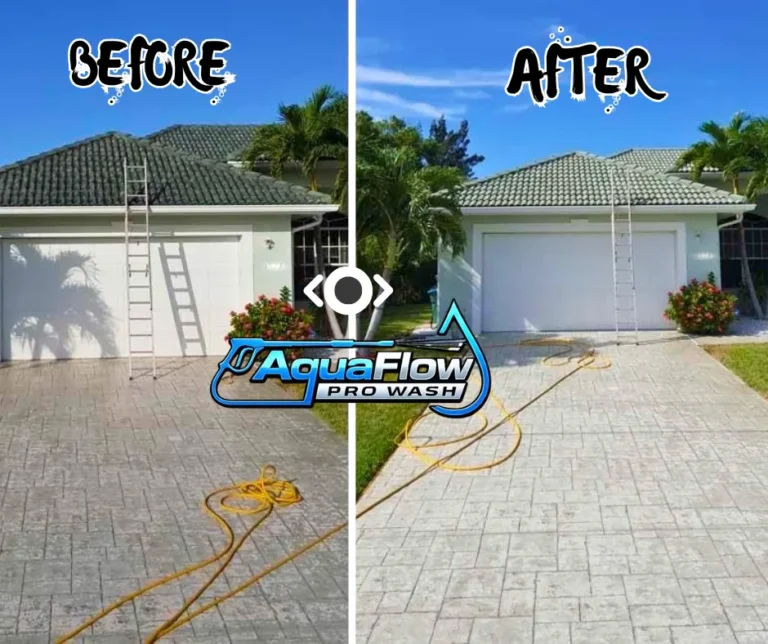
Pressure washing uses pressurized water to lift dirt and buildup from a surface. Done well, it is not about the highest number on the machine. On flat concrete, professionals often use a surface cleaner: a round, enclosed cleaning head with spinning nozzles that glides over the slab, spreads the cleaning evenly and keeps the spray close to the ground. That helps avoid the stripes and wand marks a hand-held nozzle can leave.
Pressure washing also isn’t pressure alone. On a driveway, a pretreatment that loosens organic buildup before cleaning means the job can rely less on pressure.
Section 03Why the Surface Material Matters
The single biggest factor in choosing a method is what the surface is made of. Manufacturers of roofing and siding are specific about it.
- Stucco and painted walls: textured and coated surfaces that are cleaned with a solution and a low-pressure rinse rather than force.
- Siding and trim: follow the siding manufacturer’s cleaning guidance. James Hardie, for example, specifies a low-pressure hose for its fiber cement siding.
- Roofs: cleaned according to the roofing material. Shingle and tile guidance differ, and high pressure is the wrong tool for most roofs. See what the black streaks on Florida roofs are.
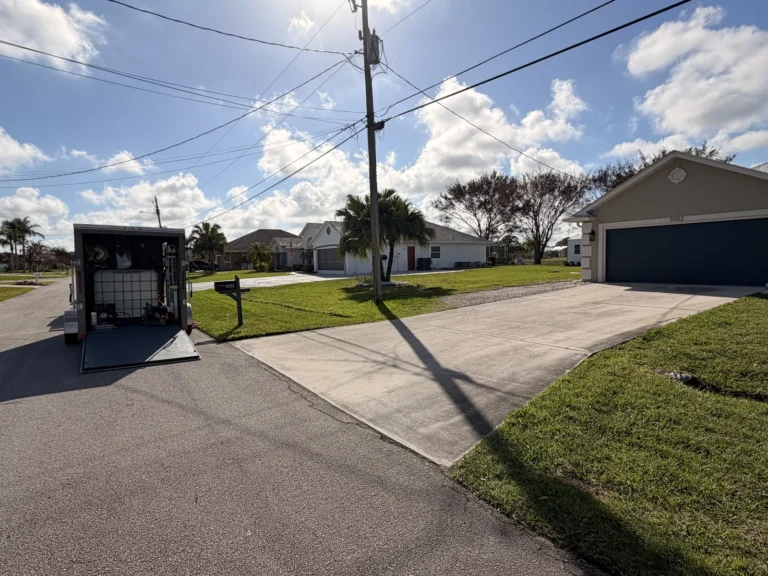
- Poured concrete: on a sound slab, controlled pressure with a surface cleaner is often the right tool, after pretreatment.
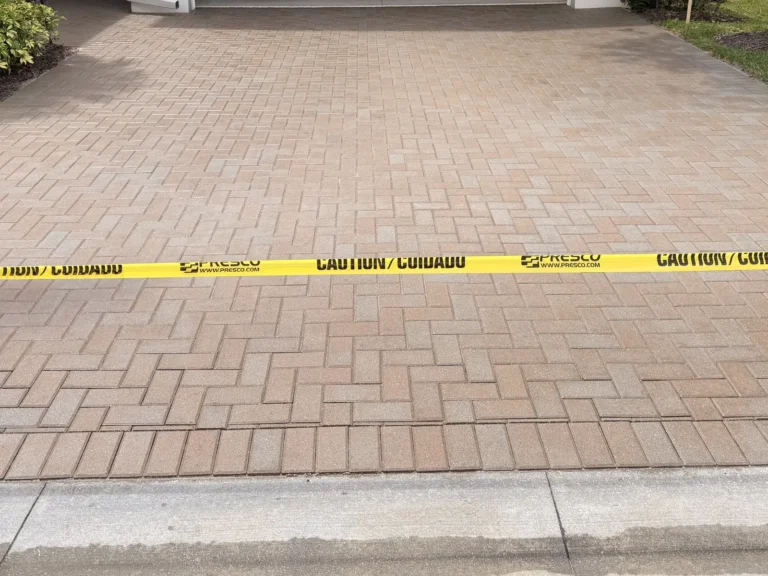
- Pavers: the joint sand helps hold pavers in place, and excessive pressure can blow it out. Pavers get their own plan; see Paver Cleaning, Sanding & Sealing.
Section 04Why the Surface’s Condition Matters Too
Two driveways made of the same concrete can still need different handling. Age, cracks, wear, earlier damage or a failing coating or sealer can all change how much pressure is appropriate. On a coated, stamped, damaged or newly installed surface, pretreatment, targeted treatment and brushing may replace pressure.
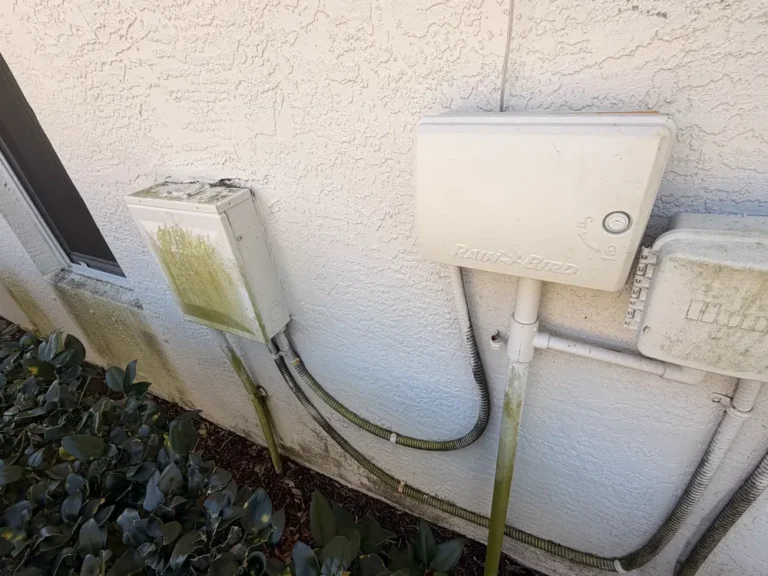
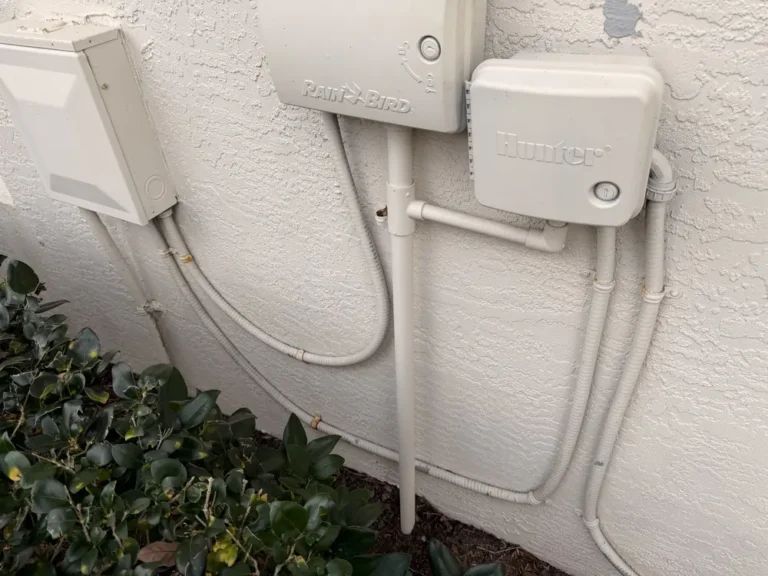
The same thinking applies to the house. Rust, widespread irrigation staining, oxidation, mineral deposits and deteriorated coatings don’t respond like ordinary buildup and are evaluated separately. Scrubbing harder or adding pressure to a deteriorating coating can do more harm than good.
Section 05How AquaFlow Chooses the Method
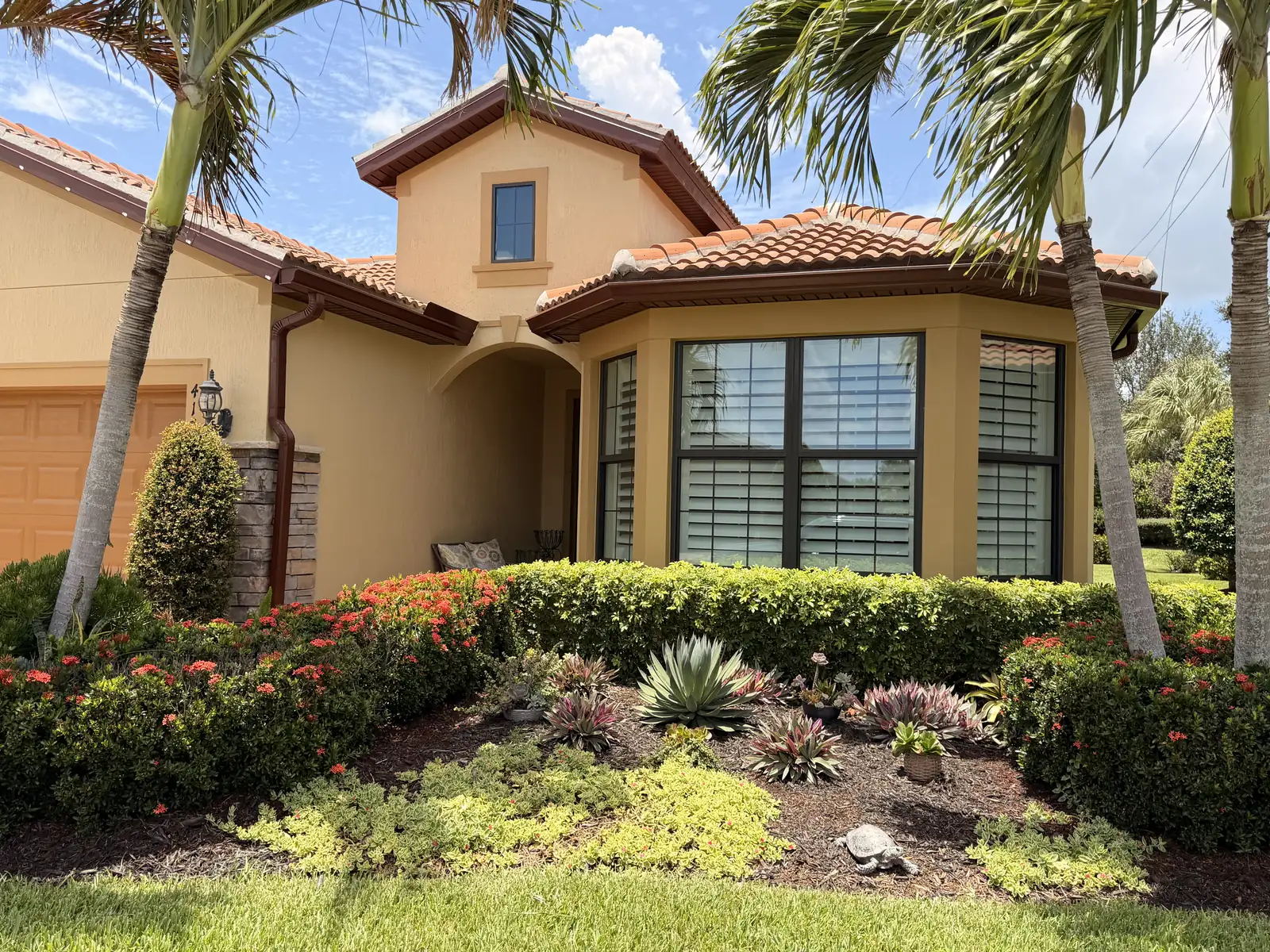
Most homeowners call it pressure washing. AquaFlow chooses the safest cleaning method for each surface. On one property, that can mean soft washing the walls, cleaning the roof according to its material, and using controlled pressure on a sound concrete driveway.
AquaFlow practice
Every house wash begins with a pre-service property inspection. On a driveway, we look at the surface, its condition and the type of staining before deciding how much pressure to use. Every driveway is pretreated, and flat concrete is cleaned with professional surface-cleaning equipment at a controlled pressure set for the surface. More pressure isn’t better; the right pressure is.
AquaFlow Property Protection Protocol
- Inspect: We look over the property first and note existing conditions, with photos when appropriate.
- Protect: We protect what’s around the work area as the job requires, such as sensitive fixtures or landscaping.
- Apply: We use the cleaning method and solution suited to the surface, with proper dwell time where needed.
- Rinse: Cleaned surfaces and the surrounding area are thoroughly rinsed or wiped down, as the service requires.
- Final Check: We inspect our work and take care of anything that needs more attention.
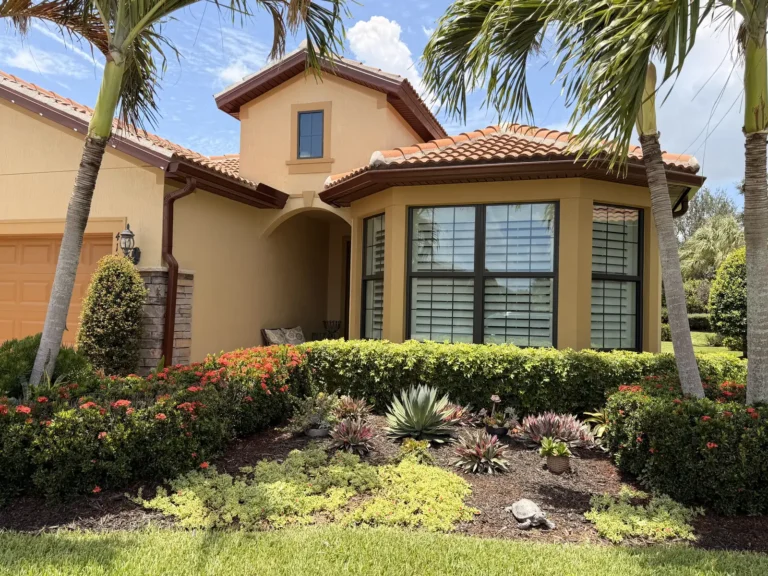 Related serviceHouse Washing on the Treasure Coast
Section 06What Florida’s Climate Means for Your Choice
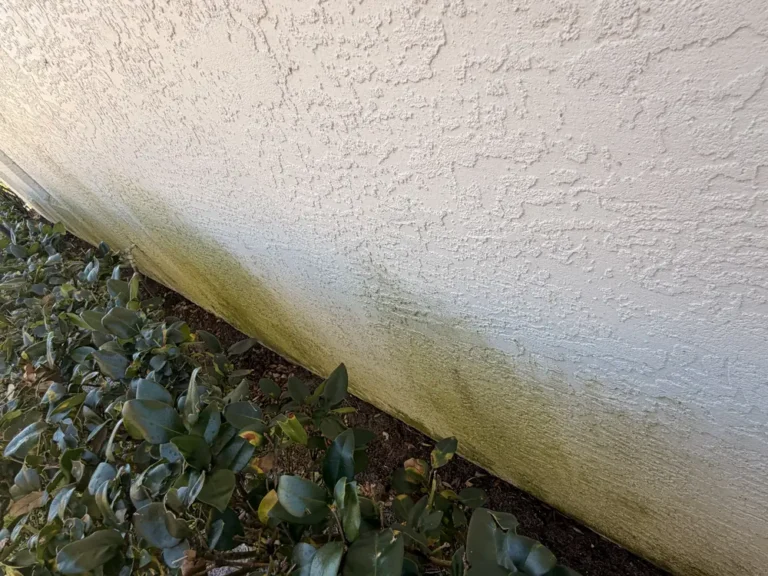
Florida’s humidity, rain and shade keep exterior surfaces damp, and damp surfaces grow algae and mildew. UF/IFAS Extension recommends leaving space around homes for airflow and notes that high-humidity areas favor algae and mildew. That is why growth often returns first on shaded walls and on concrete next to landscaping.
Because buildup comes back, the method has to be one the surface can tolerate again and again. A cleaning that scars stucco or etches concrete once becomes a bigger problem when it is repeated every year. For proactive maintenance, AquaFlow recommends evaluating a home’s exterior about every six months, and many homes do well with a professional house wash about once a year. See how often to wash your house in Florida.
Section 07Common Mistakes With a Rented Pressure Washer
- Using one nozzle and one pressure for everything. What works on a sound driveway can damage siding, screens or a painted surface.
- Holding the tip too close. Concentrated pressure can etch concrete and leave wand marks or stripes.
- Pressure washing a roof. Roofing manufacturers advise against it for shingles and set pressure limits for tile.
- Blasting pavers. Excessive pressure can wash out the joint sand that helps keep pavers stable.
- Chasing stains with pressure. Rust, oil and mineral deposits need a treatment chosen for the stain, not more force. See orange rust stains on Florida driveways.
- Forgetting the landscaping. Wet down plants before and after any cleaning solution goes near them.
Section 08Which Does My Home Need?
If you are looking at stained walls, dirty soffits or green growth on stucco, you are usually looking at a soft washing job, which is what house washing covers. If it is a dark driveway or walkway, controlled pressure with pretreatment is usually part of driveway and concrete cleaning. For an overview of each method, see Soft Washing and Pressure Washing.
You don’t need to know which method each surface needs before you call. Tell us what you are seeing and what the surfaces are made of, and we’ll recommend the approach for each one.
Frequently Asked Questions
What is the difference between soft washing and pressure washing?
Soft washing cleans with a cleaning solution, dwell time and a low-pressure rinse. Pressure washing uses controlled water pressure, often with a surface cleaner and pretreatment, on hard surfaces that can take it.
Is soft washing better than pressure washing?
Not across the board. Soft washing is the better fit for stucco, painted walls, siding and most roofs. Controlled pressure is often the right tool for sound poured concrete. The surface and its condition decide.
Can you pressure wash a stucco house?
House walls, including stucco, are normally cleaned with soft washing methods: a cleaning solution suited to the surface, proper dwell time and a low-pressure rinse, with pressure used only where it is appropriate.
Is it safe to pressure wash my roof?
Not with high pressure. ARMA says not to use a power washer on asphalt shingles, and a concrete tile manufacturer caps water pressure at 1,200 psi. Roofs should be cleaned according to their material.
Does soft washing use bleach?
Many soft washing solutions contain sodium hypochlorite, the active ingredient in household bleach. AquaFlow’s cleaning blends may contain it when appropriate, and nearby landscaping is protected as the job requires.
Will pressure washing damage my driveway?
It can if the pressure, nozzle or technique is wrong for the surface. That is how wand marks and etching happen. A surface cleaner, controlled pressure and pretreatment reduce that risk on sound concrete.
Sources
- Asphalt Roofing Manufacturers Association (ARMA). Algae Discoloration of Roofs. Technical bulletin, June 6, 2024.
- Eagle Roofing. How to Properly Clean Your Concrete Tile Roof. March 14, 2019.
- James Hardie. Tips for Cleaning Your Siding. April 17, 2024.
- PROSOCO. How to Clean Mold and Mildew from Concrete While Protecting the Surface. June 17, 2026.
- University of Florida IFAS Extension. Closing Your Seasonal Home (FCS3154/HE887). Department of Family, Youth and Community Sciences. Last revised April 2026.
The practices labeled “AquaFlow practice” in this article are AquaFlow’s own. The independent sources above provide general information about cleaning specific materials. They don’t endorse AquaFlow or establish its methods, and each manufacturer’s guidance applies only to its own products.
Not sure which method your home needs?
Tell us what you’re seeing and what the surfaces are made of. We’ll recommend the right approach for each one.