In this guide
Pavers that look chalky, hazy or milky white can be alarming, especially if you just paid to have them installed or sealed. The white is not always the same problem, though. A natural mineral haze, a sealer that trapped moisture and a coating that is failing can all look similar from the porch. Each one is handled differently, which is why the cause has to come first.
White discoloration on concrete pavers usually comes from one of two places. Efflorescence is a natural white mineral haze that moisture carries out of the concrete itself. It is common on newer pavers and doesn’t damage them. Sealer problems are different: a sealer applied over moisture, applied too thick or applied in the wrong weather can turn cloudy, milky or powdery white. Not every white paver means the sealer failed, and not every white sealer means efflorescence. The fix depends on which one you have.
| More likely cause | What you see | Good to know |
|---|---|---|
| Efflorescence | A white haze that fades when the pavers are wet and returns as they dry | Natural, not damage; it eventually stops and can be cleaned with paver-specific cleaners |
| Sealer blushing | Milky or cloudy patches after sealing, from moisture trapped under the sealer or sealer applied too thick | The existing sealer has to be identified before anything else goes on |
| Sealer applied in the wrong conditions | A white, powdery look on a water-based sealer applied when it was too cool or too humid | Application conditions matter as much as the product |
| Failing sealer | A white film that is flaking or peeling because the sealer lost adhesion | A coating problem, not a cleaning problem |
Section 01Why the Cause Matters Before Anything Is Done
It is tempting to assume the white is dirt and pressure wash it, or to assume the sealer failed and put more sealer on top. Both can make things worse. Cleaning won’t fix a coating problem, and sealing over efflorescence or trapped moisture can lock the problem in.
White or cloudy pavers are often related to moisture, efflorescence or a previous coating. The cause needs to be identified before anything new goes on the surface.
Section 02What Is Efflorescence on Pavers?
Efflorescence is a white, powdery or hazy deposit that forms on concrete and other cement-based products. On pavers, it often shows up a few weeks or months after installation, and it is easier to see on darker colors.
The key point for homeowners is that efflorescence is a natural process, not a defect. ICPI says it is a condition found in all cement-based products and that it doesn’t mean the pavers are damaged. Paver producers add chemicals to reduce it, but ICPI notes it can’t be eliminated completely.
Florida’s frequent rain and irrigation keep plenty of moisture moving through paver driveways, patios and pool decks, which is one reason efflorescence is a common question here. The same process happens on poured concrete, where the National Ready Mixed Concrete Association lists efflorescence among the causes of light patches of discoloration. Our driveway and concrete cleaning page covers efflorescence on concrete slabs.
Section 03Does Efflorescence Go Away on Its Own?
Usually, yes, eventually. Efflorescence stops when the supply of calcium hydroxide that moves to the surface runs out.
ICPI also cautions that most efflorescence cleaners contain acid and detergents. Careless or improper cleaning can damage and discolor the paver surface, so any cleaner should be tested on a small, inconspicuous area first and used according to its label.
Section 04Sealer Problems That Turn Pavers White
When the white shows up after the pavers were sealed, the sealer itself becomes a suspect. Sealer manufacturers describe several ways a clear coating can turn white.
- Sealing too soon. Pavers that haven’t dried out after cleaning or rain can trap moisture under a fresh coat.
- Too much sealer. Heavy coats, or new coats stacked on old ones, make it harder for moisture to escape.
- The wrong conditions. Florida humidity and heat leave a narrow window for some products.
- An incompatible old coating. Putting a new sealer over an existing one without knowing what it is can cause compatibility and appearance problems.
Section 05How to Tell Efflorescence From a Sealer Problem
You can’t always tell for certain from a photo, but a few clues narrow it down.
Both can also be present at once. ICPI notes that pavers should be completely dry and free of efflorescence before any sealer is applied. When efflorescence is sealed over, the white can end up trapped under the coating.
Section 06Why the Right Fix Depends on the Cause
- Efflorescence: time, rain and, when you don’t want to wait, a cleaner made for concrete pavers. Sealing waits until the pavers are dry and clear of it.
- Trapped moisture or a heavy sealer: the existing sealer is the problem, so it has to be identified and dealt with before anything new is applied. More cleaning alone won’t change it.
- A water-based sealer that dried white: the application conditions were wrong for that product, which again means evaluating the coating that is there now.
- Peeling or flaking: the coating has lost adhesion and needs attention as a coating problem.
Pressure washing harder is rarely the answer on pavers. Joint sand helps hold pavers in place, and excessive pressure can blow it out.
AquaFlow practice
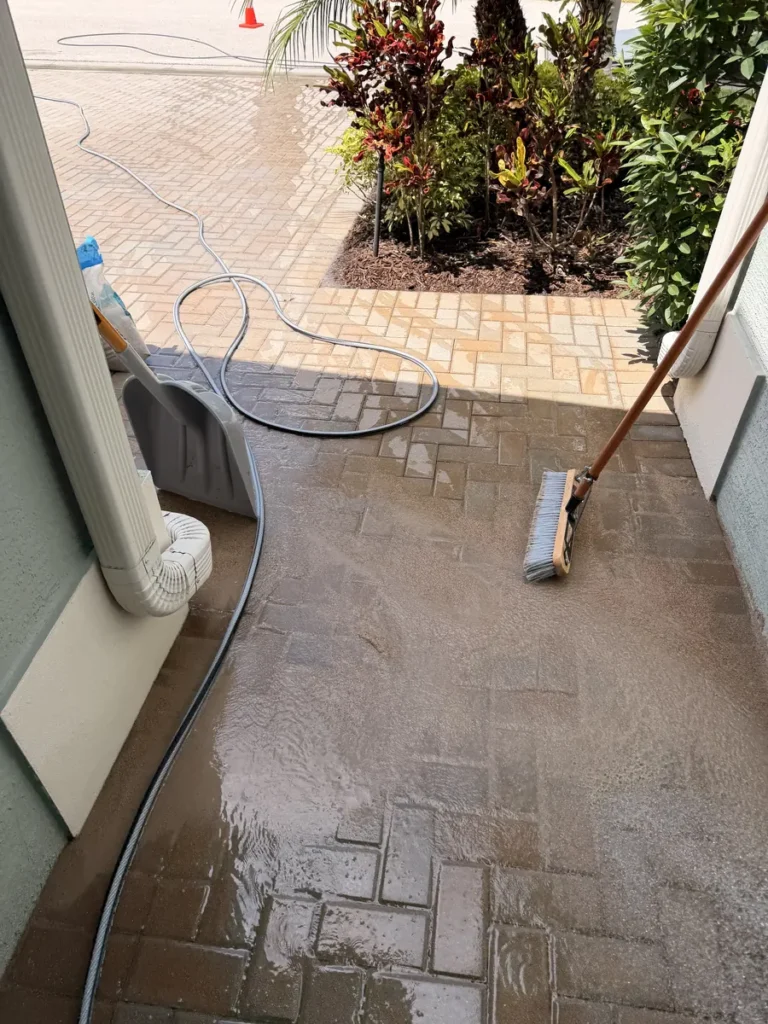
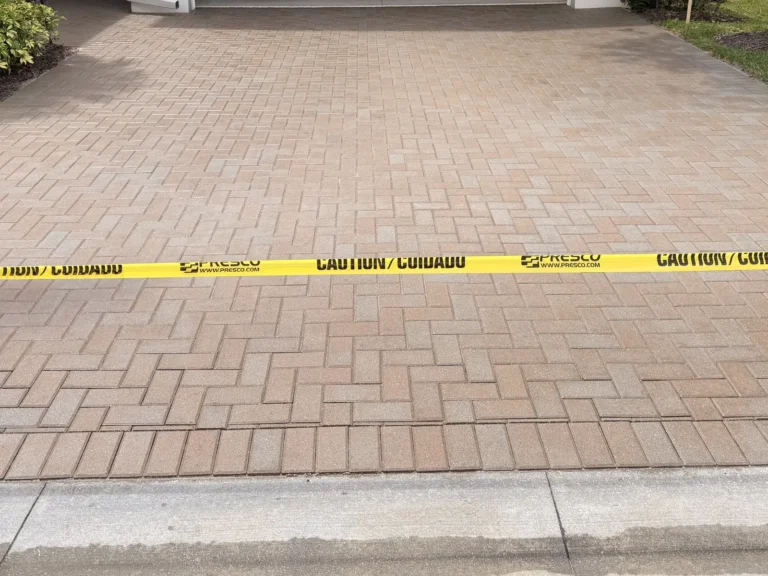
Every paver project starts with an evaluation. We check for existing sealer, efflorescence, stains, joint-sand loss, drainage and past coating problems, because each one changes how the job should be done. Existing coatings are identified before we recommend a sealer.
Then the pavers and joints are cleaned, fresh joint sand goes in where cleaning removed it or the joints were already low, and sealer is applied only after proper drying time, with the method that fits your pavers and the finish you want.
 Related servicePaver Cleaning, Sanding & Sealing
Section 07How to Reduce the Chance of White Pavers
- Manage water. Keep sprinklers from soaking pavers every day and fix drainage problems, since moisture drives efflorescence.
- Don’t rush sealing. Pavers should be clean, dry and free of efflorescence before a sealer goes on.
- Respect the weather. Sealer manufacturers specify temperature and humidity ranges for application. Florida weather can rule out some days entirely.
- Keep coats thin and know what is on the pavers. Follow the product’s coverage rate and number of coats, and keep a record of the sealer used.
- Set realistic expectations. Sealing helps protect the finish, holds joint sand in place and can enrich the color of clean pavers, but it doesn’t make pavers maintenance-free.
Section 08When to Have Your Pavers Evaluated
Call a professional before you clean or reseal when:
- The white appeared after the pavers were sealed
- You don’t know whether, or with what, the pavers were sealed before
- The finish is cloudy, peeling or flaking
- The haze keeps returning after cleaning
- Joint sand is low, or weeds and growth are coming up through the joints
AquaFlow cleans, re-sands and seals paver driveways, patios, walkways and pool decks across the Treasure Coast and northern Palm Beach County. Send a few photos and let us know whether the pavers have been sealed before. Learn more about Paver Cleaning, Sanding & Sealing.
Frequently Asked Questions
Why are my new pavers turning white?
On new pavers, a white haze is most often efflorescence: calcium from the cement that moisture carries to the surface, where it reacts with air and dries as a white deposit. ICPI describes it as natural and says it doesn’t damage the pavers.
Is efflorescence permanent?
No. ICPI says it stops once the calcium hydroxide moving to the surface is used up, typically within roughly 18 to 24 months, and rain can gradually wear it away. Paver-specific cleaners can remove it sooner, though it may return until the process stops.
Why did my pavers turn white after they were sealed?
Moisture and coating problems are the most common causes. A solvent-based sealer applied over a damp surface or applied too thick can trap moisture and turn milky white, and a water-based sealer applied in conditions that are too cool or humid can dry white or powdery. The pavers need to be evaluated to find the actual cause.
Can I seal over efflorescence?
It isn’t recommended. ICPI says pavers should be completely dry and free of efflorescence before any sealer is applied.
Will pressure washing remove the white?
It won’t fix a sealer problem, and excessive pressure can wash out the joint sand that helps hold pavers in place. Efflorescence is usually removed with cleaners made for concrete pavers, tested first on a small area.
Can you seal over old sealer?
Not without checking it first. Existing coatings can cause compatibility and appearance problems, so we identify what is on the pavers before recommending a sealer.
Sources
- Interlocking Concrete Pavement Institute (ICPI). Managing Efflorescence on Concrete Pavers: A Guide for Consumers. 2001 (copy hosted by Cambridge Pavingstones).
- The Euclid Chemical Company. Diagnosing 5 Common Concrete Sealer Problems. March 15, 2018.
- National Ready Mixed Concrete Association (NRMCA). CIP 23: Discoloration of Concrete. 2019.
The practices labeled “AquaFlow practice” in this article are AquaFlow’s own. The sources above provide general information about efflorescence and concrete sealers. They don’t endorse AquaFlow or establish its methods, and sealer guidance varies by product, so always follow the manufacturer’s instructions.
Not sure why your pavers turned white?
Send photos and tell us whether the pavers have been sealed before. We’ll look at the cause before recommending a next step.