In this guide
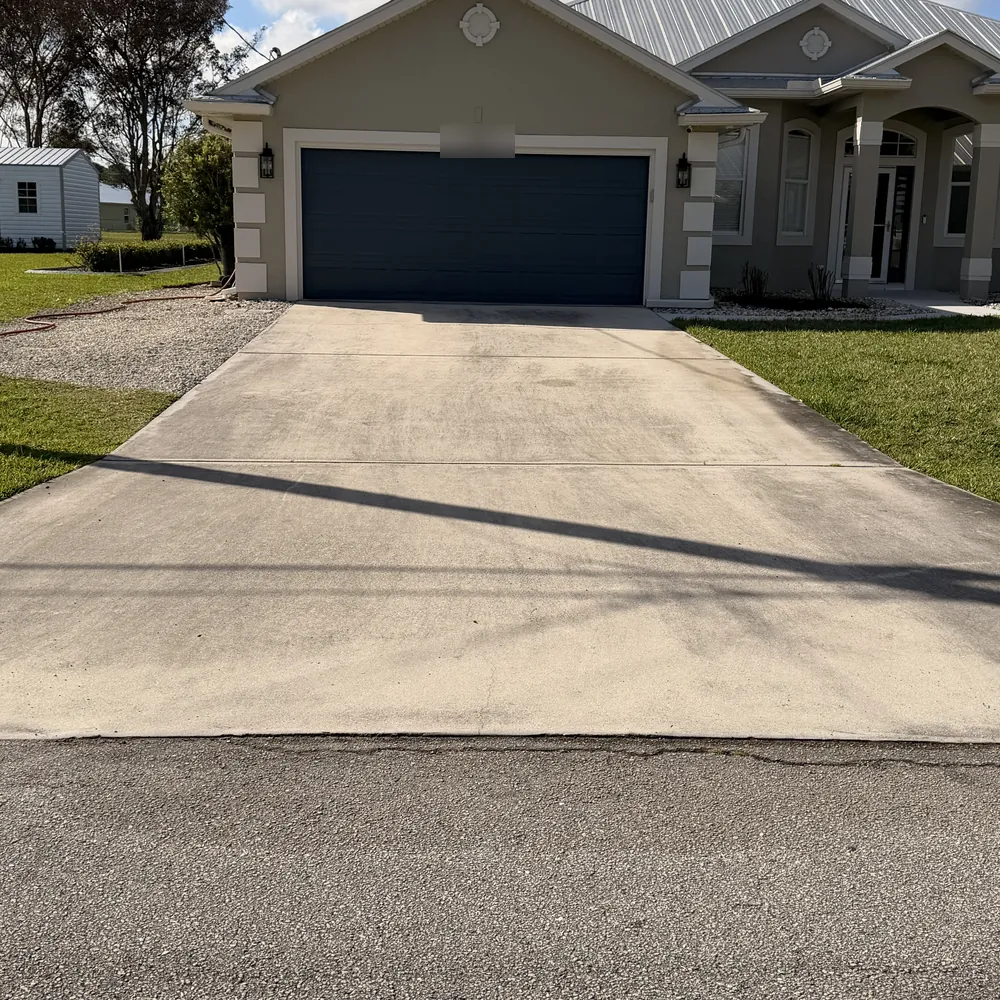
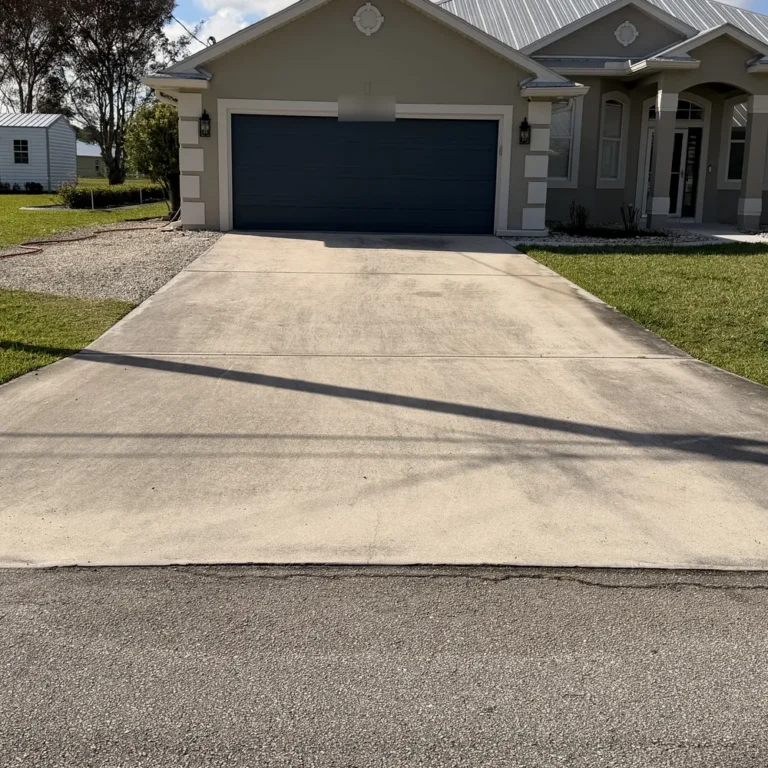
A concrete driveway rarely goes dark all at once. It starts as a shadow along the edges, a gray patch where the sprinklers land, or black blotches in the corner that never gets sun. A few rainy seasons later, the whole slab looks older than the house. Here is what is usually going on, and what actually helps.
On most Florida driveways, black, gray and green discoloration is organic growth such as algae, mold and mildew. It grows where concrete stays damp: shade, plant beds, low spots and sprinkler overspray. Proper cleaning removes it, but it returns if the slab keeps staying wet. Not every dark mark is growth, though. Tire marks, oil and some discoloration inside the concrete itself behave differently, so the stain should be identified before anyone picks the cleaning method.
| Likely cause | What you see | What usually helps |
|---|---|---|
| Algae, mold or mildew | Black, gray or green patches in shade, along edges or near plants | Pretreatment and a thorough cleaning, then less moisture on the slab |
| Dirt and tire marks | Gray lanes and dark tracks where cars drive | Normal cleaning; set-in tire marks may need targeted treatment |
| Oil or grease | Dark spots where vehicles park | A treatment chosen for that stain; older stains may lighten rather than disappear |
| Color in the concrete itself | Mottled dark areas that never change when cleaned | An honest evaluation; cleaning can’t change the color of the concrete |
Section 01What Is the Black Stuff on My Driveway?
In most cases, it is biological growth. Concrete is porous, and when a slab stays damp for long stretches, algae, mold and mildew settle in and spread across the surface. PROSOCO, a manufacturer of cleaners and treatments for concrete and masonry, describes molds and mildews as typically green, brown or black, and algae as green, red or brown. On a driveway, that mix usually reads as a dull gray-black film with darker patches where moisture lingers.
That is why the discoloration rarely looks even. The parts of the driveway that dry quickly in the sun stay lighter, while the parts that hold water stay dark.
Section 02Why Florida Driveways Turn Black So Often
Treasure Coast weather gives organic growth plenty of chances. Frequent rain, heavy dew and daily irrigation keep many driveways wet for a large part of the year, and shade slows down how fast they dry. Moisture is the common thread.
PROSOCO lists the same kinds of spots as common moisture sources: north-facing slabs, concrete under dense plantings, areas below leaking irrigation heads, shaded surfaces, sprinkler overspray, poor pitch and clogged drainage. If you can find where your driveway stays wet, you have usually found where the black started.
Section 03Not Every Dark Mark Is Algae
A dark driveway is not always a dirty one. Before cleaning, it helps to know which of these you are looking at, because each responds differently.
- Tire marks and traffic dirt. Gray lanes and dark tracks build up where cars drive and turn. Everyday dirt comes up with normal cleaning. Tire marks that have set in can need targeted treatment or extra work.
- Oil and grease. Dark spots where vehicles park are usually oil. Because concrete is porous, older or heavier oil stains can soak in and may lighten rather than disappear completely.
- Discoloration inside the concrete. The National Ready Mixed Concrete Association (NRMCA) explains that concrete flatwork can show dark blotches or mottling caused by how it was mixed, finished or cured, such as hard troweling. That color is part of the slab, not something sitting on top of it.
- Orange or brown stains. These are usually iron, often from irrigation water or fertilizer, and they need a different treatment. See our guide to orange rust stains on Florida driveways.
Realistically, some discoloration is permanent staining, surface wear, earlier damage or a condition in the concrete that cleaning can’t safely reverse. A good cleaning company will tell you which marks it expects to come out and which it doesn’t before the work starts.
Section 04Is the Black Growth Harmful to My Driveway?
Mostly, it is an appearance problem, but not only that. PROSOCO notes that biological growth can affect both the appearance and the durability of concrete and masonry, and that because growth is tied to water retention, deterioration can speed up where it takes hold. It also points out that growth such as moss can make walking surfaces slippery.
For most homeowners, the practical concerns are a driveway that looks neglected, a walkway that gets slick after rain, and growth that keeps spreading the longer it is left alone.
Section 05How a Black Driveway Is Cleaned Properly
The goal is to remove the growth evenly without damaging the surface. That takes the right cleaning solution, enough time for it to work, and pressure set for the concrete rather than as much as the machine can deliver.
AquaFlow practice
Every driveway we clean is pretreated. The pretreatment loosens organic buildup before cleaning, so the job relies less on pressure. Flat concrete is cleaned with professional surface-cleaning equipment at a controlled pressure set for the surface. More pressure isn’t better; the right pressure is.
Edges, corners and steps get detail work. A light finishing treatment is usually applied afterward, especially when the driveway was heavily soiled, and left to dry on the surface. Plants and lawn next to the work area are watered first, with a neutralizing treatment when it’s necessary, and vehicles should stay off the concrete until it’s dry.
AquaFlow Property Protection Protocol
- Inspect: We look over the property first and note existing conditions, with photos when appropriate.
- Protect: We protect what’s around the work area as the job requires, such as sensitive fixtures or landscaping.
- Apply: We use the cleaning method and solution suited to the surface, with proper dwell time where needed.
- Rinse: Cleaned surfaces and the surrounding area are thoroughly rinsed or wiped down, as the service requires.
- Final Check: We inspect our work and take care of anything that needs more attention.
 Related serviceDriveway & Concrete Cleaning
Section 06What to Avoid When Cleaning It Yourself
A rented pressure washer can make a driveway look better for a weekend and worse for years. The most common problems come from too much force in one spot.
- Holding a narrow nozzle close to the concrete. The wrong pressure, nozzle or technique can etch the surface and leave wand marks or stripes that show up every time the slab gets wet.
- Treating every stain the same way. Oil, rust and growth each need a different approach. More pressure rarely fixes a stain that needs a different treatment.
- Letting cleaner dry on the surface or skipping the rinse. Residue can streak and discolor the concrete.
- Using metal brushes. PROSOCO notes that metallic bristles can leave deposits behind.
- Forgetting the plants. Wet down landscaping before and after any cleaning solution goes near it.
- Cleaning stamped, coated or new concrete like ordinary concrete. A decorative finish, a coating or a recently poured slab may call for less pressure or a different method entirely.
Section 07How to Keep Your Driveway From Turning Black Again
Cleaning removes the growth. Keeping it away comes down to how long the concrete stays wet.
- Adjust the sprinklers. Aim heads away from the driveway and fix leaking or misaligned heads so the slab isn’t watered every morning.
- Improve drainage. Clear clogged drains and pay attention to low spots where water sits after rain.
- Let in light and air. Trimming plantings and branches that shade the slab helps it dry faster. PROSOCO notes that growth is reduced by better drainage or more direct sunlight.
- Consider sealing after cleaning. PROSOCO says a water repellent can greatly reduce the likelihood of future growth once the slab is clean and dry. AquaFlow also seals poured concrete, separately from our paver sealing. Ask about it with your estimate and we’ll tell you whether it’s a good fit for your driveway.
- Clean on a schedule rather than waiting. Light, regular cleaning is easier on the concrete than removing years of buildup at once.
The same moisture that darkens a driveway also affects the rest of the house. If you are trying to decide between methods for different surfaces, see soft washing vs. pressure washing.
Section 08When to Call a Professional
A light film on a small slab is a reasonable weekend project if you go easy on the pressure. It is usually worth calling a professional when:
- The whole driveway, walkway and sidewalk are dark, not just a few patches
- Growth comes back quickly or covers areas you can’t reach evenly
- You also see oil, rust or white mineral deposits mixed in with the black
- The concrete is stamped, coated, cracked or recently installed
- You want the slab cleaned evenly, without stripes or wand marks
AquaFlow cleans driveways across the Treasure Coast and northern Palm Beach County. The walkway to your front door is always included, and on a standard residential lot the front sidewalk is generally included too. See Driveway & Concrete Cleaning, or driveway cleaning in Port St. Lucie. If your driveway is made of pavers rather than poured concrete, it needs a different plan; see Paver Cleaning, Sanding & Sealing.
Frequently Asked Questions
Why is my concrete driveway turning black?
Usually because algae, mold and mildew are growing on concrete that stays damp. Shade, nearby plants, sprinkler overspray and poor drainage keep parts of a driveway wet, and growth spreads there first. Tire marks, oil and discoloration in the concrete itself can also darken a slab.
Is black mold on a driveway dangerous?
On a driveway, the main concerns are appearance and slippery footing after rain. PROSOCO notes that biological growth can also affect the durability of concrete over time because it is tied to water retention. If you have health concerns about mold, talk to a medical professional.
Can I just pressure wash the black off?
High pressure alone can leave stripes, wand marks or etching, especially with a narrow nozzle held close to the surface. Professional cleaning pretreats the growth first and uses equipment and pressure set for the concrete.
Will bleach remove black stains from concrete?
PROSOCO cautions that bleach can leave residues and lighten the color of masonry, and that cleaners should be tested on a small area first. The right product depends on the surface and what is growing on it.
How long will my driveway stay clean?
It depends on how quickly the concrete dries. Shaded, irrigated and poorly drained slabs darken sooner. Reducing moisture and considering a sealer or water repellent once the slab is clean can help it stay clean longer.
Does AquaFlow clean the walkway and sidewalk too?
The walkway to your front door is always included with driveway cleaning. On a standard residential lot, the front sidewalk is generally included when its size and condition allow. Extensive sidewalks, corner lots, heavy staining and specialty stain treatment can add to the price, and we’ll tell you before any extra work is done.
Sources
- PROSOCO. How to Clean Mold and Mildew from Concrete While Protecting the Surface. June 17, 2026.
- PROSOCO. Tech Note 101: Removal of Biological Growth. Revised July 2020.
- National Ready Mixed Concrete Association (NRMCA). CIP 23: Discoloration of Concrete. 2019.
The cleaning practices labeled “AquaFlow practice” in this article are AquaFlow’s own. The sources above provide general information about biological growth and discoloration on concrete. They don’t endorse AquaFlow or establish its methods.
Not sure what’s darkening your driveway?
Send a few photos or give us a call. We’ll look at the surface and the staining and recommend the right approach.